

Bolted couplers
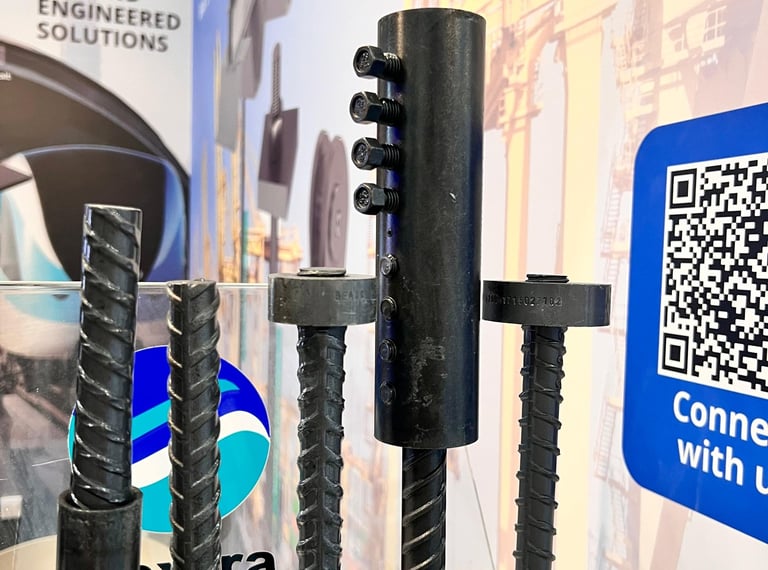
Bolted rebar couplers represent an interesting alternative for splicing reinforced concrete structures, especially in situations where the traditional lap splice method creates construction challenges.
In conventional systems, steel bars must overlap for a certain length to ensure load transfer, which often leads to areas with high reinforcement congestion. This congestion can make rebar assembly more difficult, reduce space for concrete flow, and complicate vibration and compaction—ultimately increasing the risk of concreting defects.
In this context, bolted couplers emerge as a mechanical solution that allows two reinforcement bars to be connected without the need for overlap.
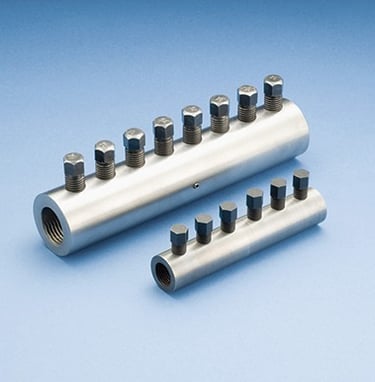
The system consists of a cylindrical metal sleeve into which the bars are inserted and secured using lateral tightening bolts. These bolts press the bars against the inner surface of the sleeve, creating a mechanical lock capable of transferring structural forces between the reinforcements.
One of the key advantages of this solution is that, unlike other mechanical splicing systems, it does not require threading the ends of the bars, simplifying installation and reducing material preparation steps.
Despite its advantages, as with any structural solution, the adoption of this technology should be supported by specific studies and testing to ensure the performance and reliability of the connection.
© 2025 Vitrine de Inovação. All rights reserved.
Follow us on Instagram as well
contato@vitrinedeinovacao.com
CNPJ: 65.902.817/0001-09