

Carbon-capturing concrete
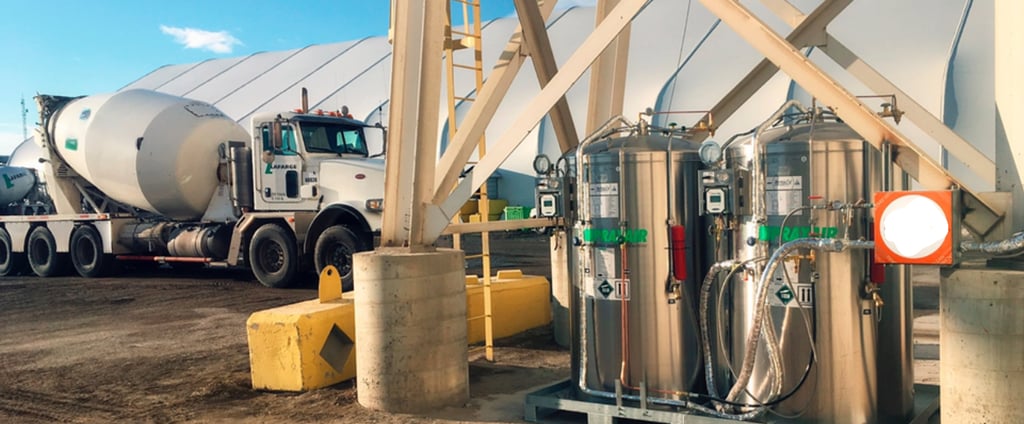
A new technological approach is enabling the reduction of concrete’s environmental impact through the use of carbon dioxide (CO₂) during the production and curing process.
Cement manufacturing—the main component of concrete—is responsible for a significant share of global CO₂ emissions. This is mainly due to the calcination of limestone and the high temperatures required to produce clinker.
To address this challenge, new technologies are using CO₂ captured from industrial processes and injecting it directly into fresh concrete. During this process, the gas reacts chemically with compounds in the cement, forming calcium carbonate—a stable mineral that becomes permanently embedded within the concrete matrix.
This phenomenon, known as mineralization, not only captures carbon within the material but can also improve mechanical properties, such as compressive strength. As a result, producers can optimize concrete mix designs and even partially reduce cement consumption without compromising structural performance.
In practice, this technology can help avoid carbon emissions during concrete production and contribute to the decarbonization of the construction sector while maintaining the required performance standards.
With growing global pressure for low-carbon solutions, the use of CO₂ as a curing agent or mineralizing additive in concrete emerges as a promising alternative to make one of the world’s most widely used materials more sustainable.
© 2025 Vitrine de Inovação. All rights reserved.
Follow us on Instagram as well
contato@vitrinedeinovacao.com
CNPJ: 65.902.817/0001-09