

Construction with fungi
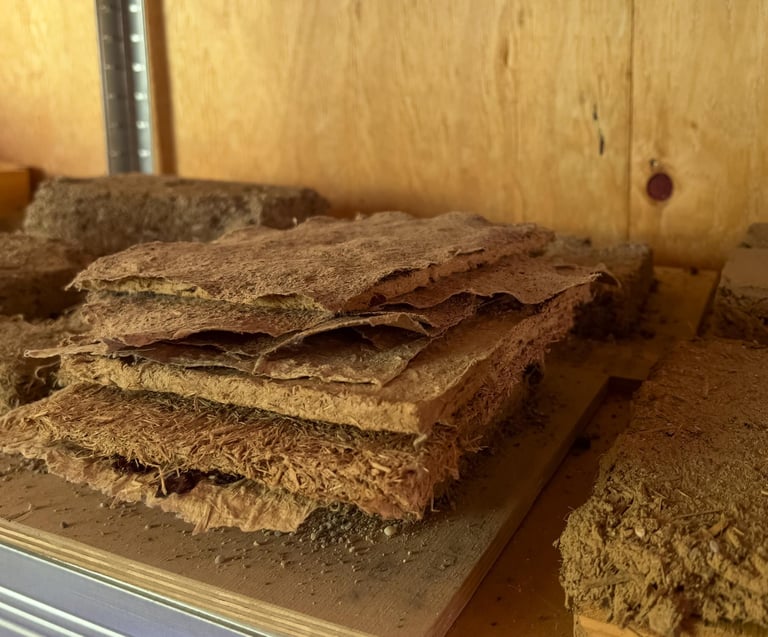
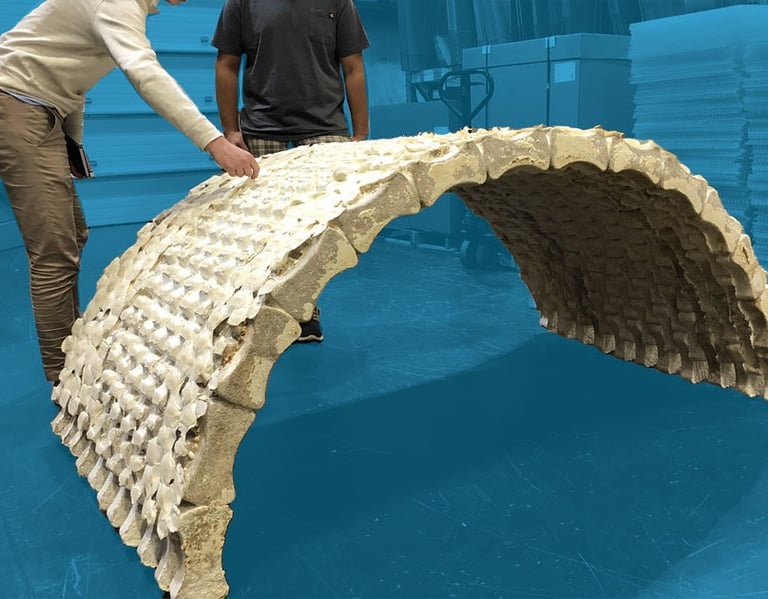
Recent research suggests that materials made from mycelium—the root-like structure of fungi—could become a sustainable alternative for the construction industry. These materials are being studied as a way to reduce the carbon emissions associated with traditional building systems.
Researchers and biotechnology companies are developing construction materials using this natural organism. The process involves growing mycelium on organic substrates, such as agricultural waste or wood by-products. As it grows, the mycelium forms a natural network that binds the substrate particles together, creating a lightweight and structurally stable composite.
After the growth phase, the material undergoes a drying or heat-treatment process that stops the biological activity of the fungus. The result is a solid product that can be shaped into blocks, panels, or insulation elements, offering low weight, good thermal insulation properties, and potential fire resistance.
Another important aspect is that mycelium cultivation can capture carbon during its growth, storing part of the CO₂ within the material’s biomass. In addition, its production generally requires less energy compared to traditional industrial processes.
Mycelium-based materials are being explored as an alternative to replace synthetic foams and other petroleum-derived products, expanding the possibilities for bio-based materials in construction.
Despite their strong potential, researchers highlight that challenges still remain for large-scale application, such as improving mechanical performance, standardizing production processes, and evaluating long-term durability in buildings.
Even so, this technology represents an innovative approach that combines biotechnology and construction, contributing to the development of lower-impact materials and potentially transforming how construction materials are produced in the future.
© 2025 Vitrine de Inovação. All rights reserved.
Follow us on Instagram as well
contato@vitrinedeinovacao.com
CNPJ: 65.902.817/0001-09