

Drywall insulation foam
Drywall systems have become a widely adopted solution in construction, mainly due to their fast execution, lightweight structure, and high-quality finish. Traditionally, the thermal and acoustic performance of these walls is achieved through the use of materials such as glass wool, mineral wool, or PET wool, installed within the cavity formed between the metal studs.
In recent years, however, new technologies have emerged aiming to replace or complement these fibrous materials. Among the most promising alternatives are polymeric insulating foams, which are starting to gain traction as an efficient solution for insulation in drywall systems.
This technology is already widely used in industrialized construction systems, such as wood frame, where foam insulation provides excellent thermal performance and air sealing. More recently, these solutions have been adapted for internal drywall partitions, expanding their range of applications.
Insulating foams are lightweight polymeric materials composed of a microcellular structure filled with air. This configuration significantly reduces heat transfer between environments and, depending on the technology used, also contributes to sound absorption and dissipation, improving the acoustic performance of partitions.
Application methods in drywall systems
In drywall systems, insulating foams can be applied in different ways, depending on the material technology and project requirements:
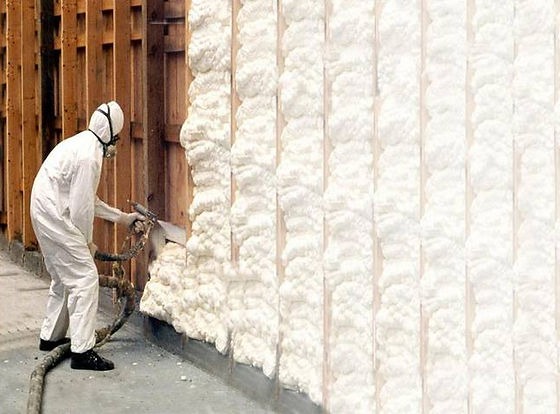
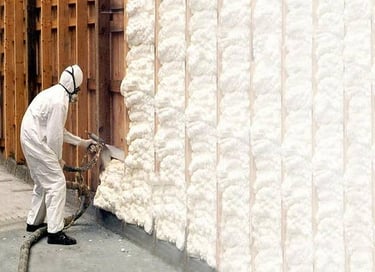
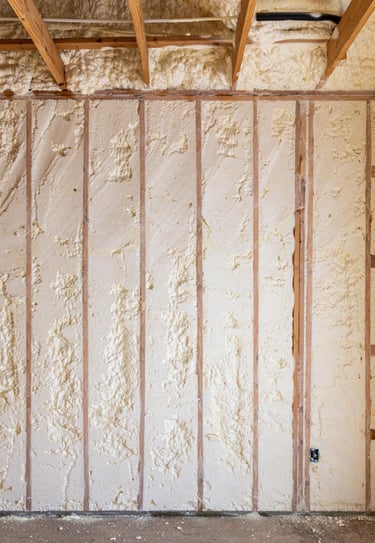
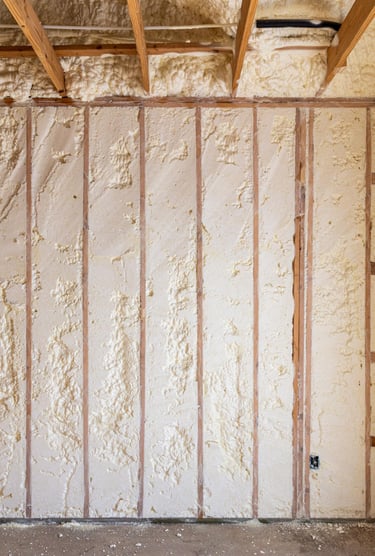
Spray foam: In this method, the foam is applied directly into the wall cavity before closing with gypsum boards. During application, the material expands and fills all gaps between the metal studs, reducing voids and ensuring continuous insulation.
Rigid foam panels: Another option is the use of pre-manufactured foam boards, which are cut and fitted between the structural studs. This solution allows better dimensional control and can simplify installation.
Specialized acoustic foams: Some manufacturers develop foams with optimized cellular structures for sound absorption, specifically designed for internal partitions that require higher acoustic performance.
The introduction of insulating foams in drywall systems reflects a broader evolution in construction materials, driven by the demand for lighter, more efficient solutions aligned with industrialized building processes.
As polymer technologies and off-site construction continue to advance, new materials are expected to emerge to replace or complement traditional insulation. In this context, keeping up with these innovations represents a valuable opportunity for builders and designers seeking gains in productivity, comfort, and overall building performance.
© 2025 Vitrine de Inovação. All rights reserved.
Follow us on Instagram as well
contato@vitrinedeinovacao.com
CNPJ: 65.902.817/0001-09