

Photovoltaic paint
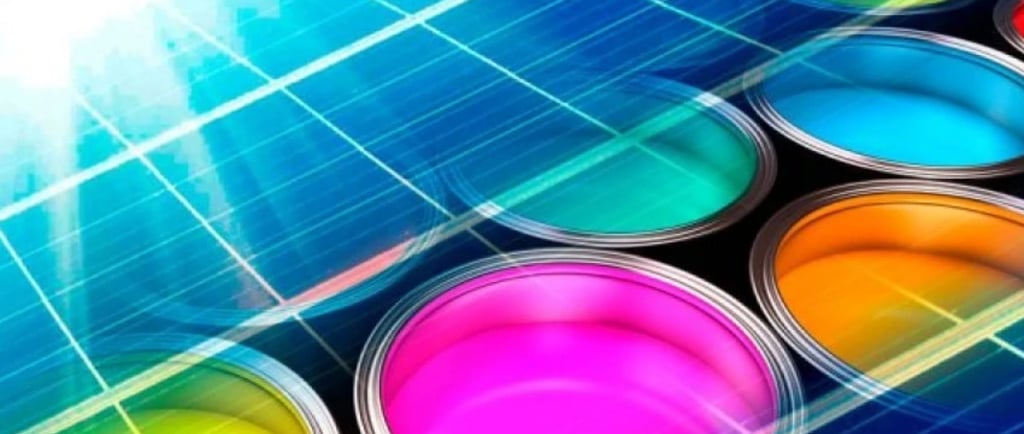

Photovoltaic paints, also internationally known as solar paint or photovoltaic coatings, are an emerging innovation aimed at transforming ordinary surfaces—such as façades, roofs, and architectural elements—into potential energy generators using sunlight.
Unlike traditional photovoltaic systems based on rigid panels, this technology proposes integrating energy generation directly into the building’s finishing layer, expanding architectural possibilities and supporting the concept of more active and energy-efficient buildings.
What it is:
These are specialized coatings that incorporate photoactive materials into their composition, such as nanoparticles, advanced semiconductors, quantum dots, or perovskite-based compounds. These materials enable the paint to interact with solar radiation and convert it into electricity or other usable forms of energy.
Currently, photovoltaic paints do not replace conventional solar panels, but they represent an important research frontier for the future of sustainable construction.
How it works:
After being applied to a surface, the coating forms a functional layer capable of:
Absorbing sunlight through its photoactive components;
Converting this energy into electricity or alternative energy processes, such as hydrogen generation;
Directing or storing the generated energy through complementary electrical or chemical systems.
The efficiency, durability, and stability of these coatings are still being improved, which remains the main focus of current research.
Cost-benefit and accessibility
One of the main advantages of photovoltaic paints lies in their long-term cost-benefit potential and accessibility.
International studies and research indicate that the manufacturing costs of these coatings could be significantly lower than those of traditional photovoltaic systems—mainly because they eliminate the need for metal structures, mounting systems, and specialized installation accessories. In addition, the application process, similar to conventional painting, tends to reduce installation and labor costs.
This combination could, in the future, democratize access to renewable energy generation, expanding its adoption across different economic, urban, and industrial contexts.
Potential applications in construction
Photovoltaic paints expand the concept of Building Integrated Photovoltaics (BIPV) and could, in the future, be applied to:
façades of residential and commercial buildings
roofs and curved or complex surfaces
architectural elements exposed to sunlight
urban solutions and infrastructure with large surface areas
experimental applications in vehicles and urban equipment
consumer electronics (portable devices, outdoor equipment, and urban sensors)
Currently, there are no widely available photovoltaic paint products on the global market with performance comparable to conventional solar systems. The technology is still in advanced research stages, prototypes, and pilot projects, with major developments concentrated in Europe, North America, and the Asia-Pacific region.
Large-scale commercialization will depend on technical advancements, international certifications, proven durability, and economic viability.
Photovoltaic paints are not just a new energy solution—they represent a paradigm shift: buildings that move from being mere energy consumers to becoming active energy-generating platforms. For this reason, this technology is on the radar of global innovations that could significantly impact the future of the construction industry.
© 2025 Vitrine de Inovação. All rights reserved.
Follow us on Instagram as well
contato@vitrinedeinovacao.com
CNPJ: 65.902.817/0001-09