

Smart Vibration
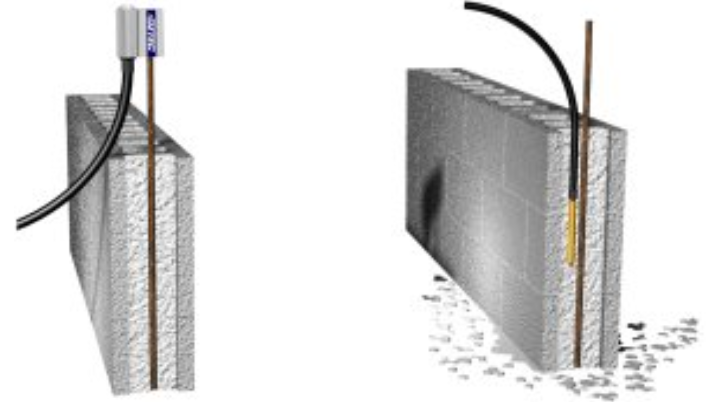
The quality of structural concrete depends directly on a step often underestimated in the construction process: proper vibration after placement. This procedure is essential to eliminate voids, ensure proper compaction, and allow the material to fully encapsulate the reinforcement.
Traditionally, this task is performed using immersion vibrators, which are inserted directly into fresh concrete. However, in elements with high reinforcement density—such as structural walls, columns, or grouted masonry—the insertion of conventional vibrators can become difficult or even unfeasible.
In this context, an innovative technology emerges that transforms the reinforcement itself into a vibration system for concrete consolidation.
This solution consists of a device designed to vibrate concrete or grout directly through the steel reinforcement bar. The equipment is simply attached to the top of the bar, transmitting vibrations along its entire length.
In practice, the system turns the reinforcement into a vibrator, allowing vibration to be delivered throughout the full height of the structural element.
This method is especially useful in situations where access for traditional vibrators is limited or where reinforcement congestion is high.
How it works
The operator attaches the device to the end of the steel bar
The motor generates high-frequency vibrations
The vibration is transmitted through the steel bar into the fresh concrete
The concrete consolidates, eliminating air pockets and voids
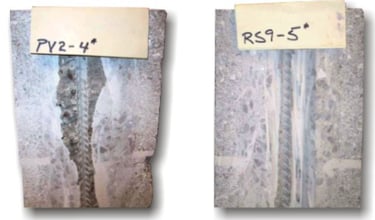
This process can compact concrete in just a few seconds, significantly reducing execution time compared to conventional methods. Tests indicate that the system can achieve performance comparable to traditional vibration techniques, but with greater speed and lower risk of operational errors.
Although the technology itself is relatively simple, the concept behind it demonstrates how small innovations can generate significant gains in productivity and quality within construction.
By using the reinforcement as the medium for vibration transmission, the system simplifies a critical stage of concreting and expands the possibilities for proper consolidation in complex elements.
For construction companies and engineers, adopting solutions like this can lead to better concrete quality control, reduced rework, and increased efficiency on-site.
As with any construction innovation, the application of this technology should be preceded by testing and technical validation to ensure that the vibration transmitted through the reinforcement does not compromise the bond between steel and concrete.
© 2025 Vitrine de Inovação. All rights reserved.
Follow us on Instagram as well
contato@vitrinedeinovacao.com
CNPJ: 65.902.817/0001-09