

Solar roads
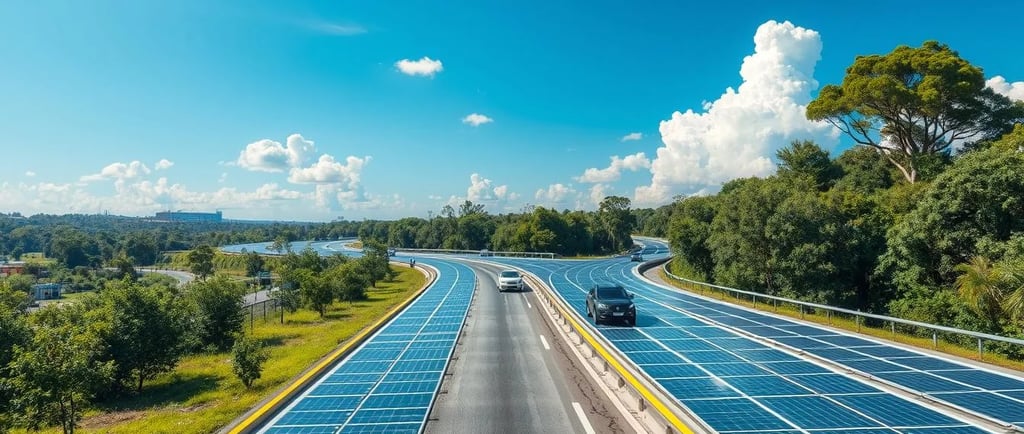
In the United States, the Solar Roadways project is developing hexagonal panels with a photovoltaic substrate to replace traditional asphalt. Each panel can generate up to 48 watts, capturing the substantial solar energy that hits road surfaces and is currently wasted. This gives the technology a dual purpose: modern infrastructure and a smart energy grid.
These panels are designed to withstand the weight and traffic of heavy vehicles, incorporate LED lighting for road markings, can charge electric vehicles, and include a heating system capable of melting accumulated snow.
In practical tests, four hexagonal panels connected to a micro-inverter generated approximately 52.4 kWh over six months, demonstrating the real feasibility of energy generation directly from road surfaces.
In France, Wattway applies solar panels directly onto existing asphalt, eliminating the need to build new roads. The first 1 km stretch has an estimated capacity of generating 280 MWh per year.
In the Netherlands, SolaRoad focuses on bike paths, proving that the technology can extend beyond highways.
In China, a 1 km solar road can produce up to 1 GWh per year—enough energy to power around 800 homes while also supporting public lighting, surveillance cameras, and snow-melting systems.
These projects reinforce that investing in photovoltaic paving means investing in the future—combining infrastructure, innovation, and clean energy.
© 2025 Vitrine de Inovação. All rights reserved.
Follow us on Instagram as well
contato@vitrinedeinovacao.com
CNPJ: 65.902.817/0001-09